
COHESION: COmmunity HEalth and well-being for older adults through SInging and social cONnection
Singapore is ageing rapidly, with one in four citizens projected to be aged 65 and above by 2030 (Ministry of Health, 2024). This demographic shift presents significant challenges for mental health and social wellbeing as older adults report the poorest quality of life, higher levels of negative thoughts, and weaker social connections compared to younger age groups (National Council of Social Service, 2017). As Singapore’s health ageing policy frameworks, such as AgeWell SG, are in place to promote ageing in the community and emphasize health promotion and preventive care, there’s a need to explore the potential of community-based initiatives that support mental health and social bonds.
Globally, participatory arts such as community singing have been recognised to reduce anxiety and depression, enhance wellbeing, and foster social connections (Allison et al., 2020; Fancourt & Finn, 2019; Galinha et al., 2022; McCrary et al., 2022; McQuade & O’Sullivan, 2024). Despite this evidence, such approaches remain underutilised in Singapore, and there is limited community-based research examining their impact on mental health, loneliness, and quality of life among older adults.
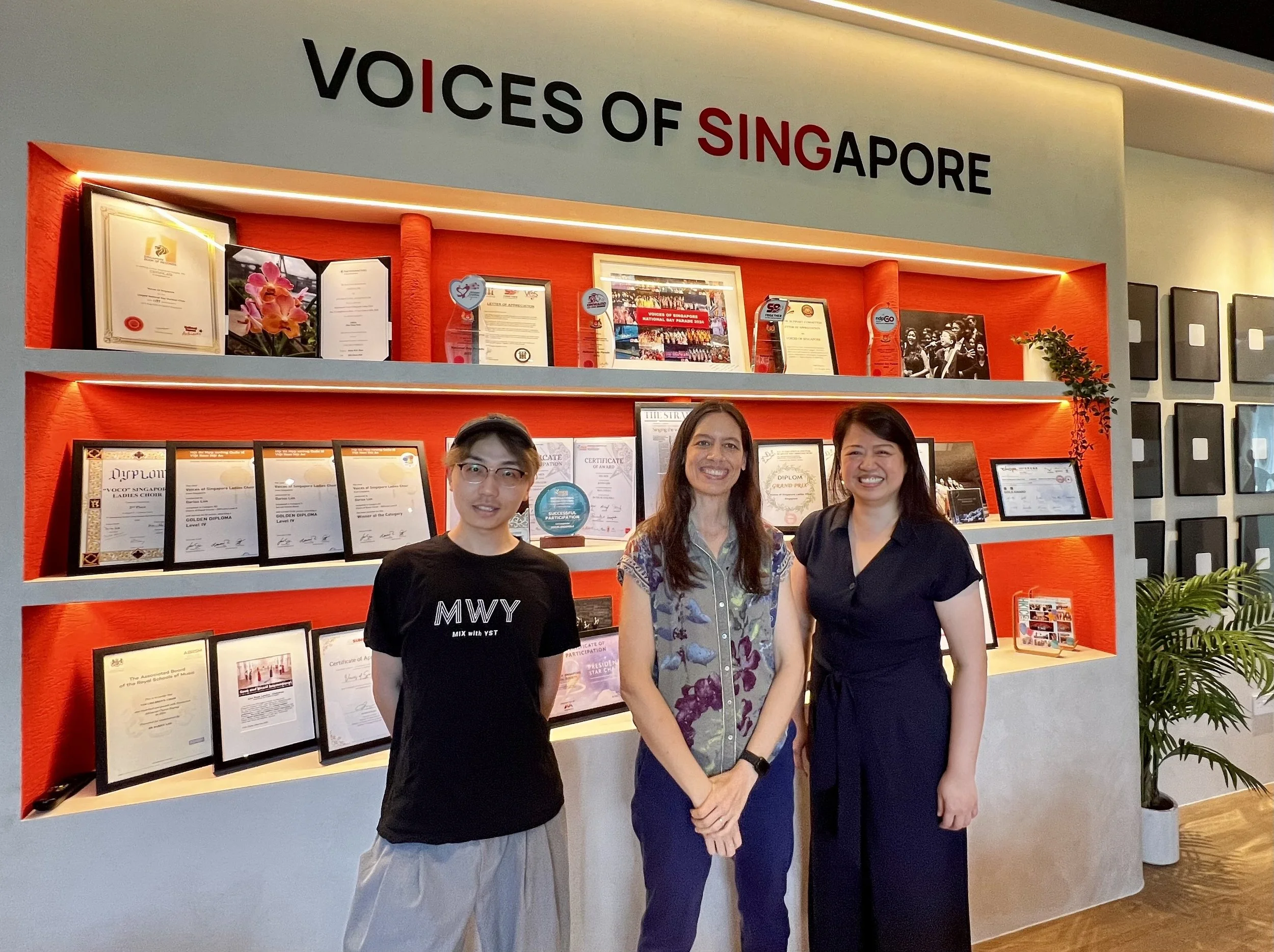
Pictured: Chen Yifan (Research Coordinator, CMH), A/Prof Kat Agres (Director, CMH), Tay Hwee Ling (Assistant Manager, Voices of Singapore).
To address this gap, COHESION (COmmunity HEalth and well-being for older adults through SInging and social cONnection) was developed, in collaboration with Voices of Singapore (VoS), Presbyterian Community Social Services (PCS), and Lions Befrienders (LB). COHESION is a community-based initiative that uses a mixed-methods study design to examine the impact of a 12-week group singing program on older adults’ mental health, loneliness, and wellbeing. Participants attend weekly one-hour singing sessions held at their respective active ageing centre. The sessions are led by trained facilitators from VoS, which include vocal warm-ups, group singing, and community-building activities, culminating in a final performance. As part of the study, participants were also invited to reflect creatively on their experience in the programme. These reflections complement the study’s quantitative and qualitative findings by showing how group singing was experienced not only as an activity, but also as a source of connection, expression, and wellbeing. One of the participants’ creative outputs is pictured below.
In addition, as part of the knowledge translation and policy engagement efforts of COHESION, CMH convened a group of local decision-makers, WHO officials, national leaders in social services, arts, and healthcare, as well as regional Ministry of Health representatives to discuss how to leverage the power of arts for healthy ageing in Singapore and the region.
The preliminary results of the COHESION study will be presented during the 9th International Conference for the International Association of Music & Medicine (IAMM). Stay tuned for more results and upcoming publications!
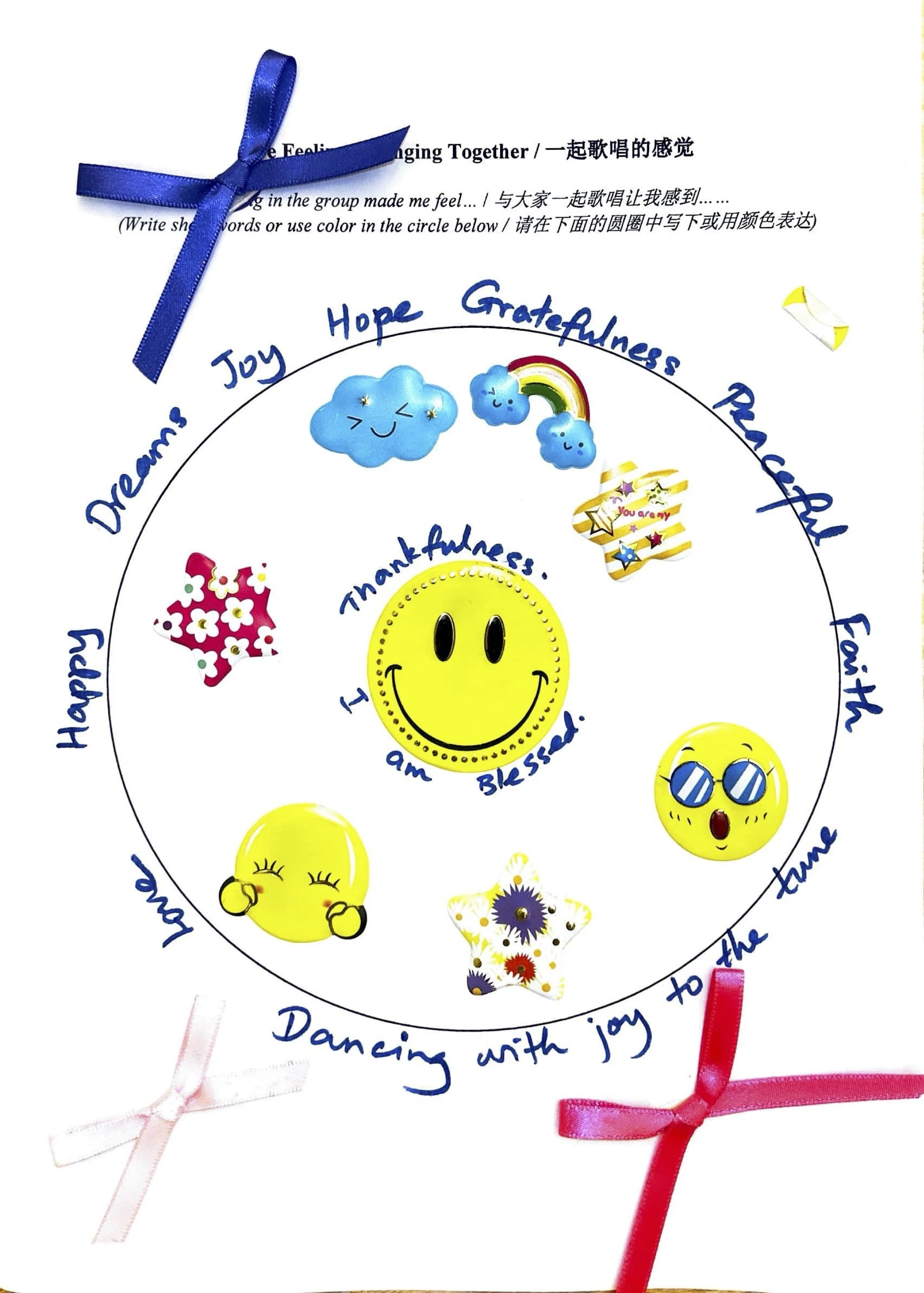
Participant artwork reflecting the experience of singing together, featuring words such as joy, hope, gratitude, peace, faith, and thankfulness.
This research is supported by the Ministry of Education, Singapore, under the Academic Research Fund Tier 1 (FY2025).
Allison, T. A., Nápoles, A. M., Johnson, J. K., Stewart, A. L., Rodriguez-Salazar, M., Peringer, J., Sherman, S., Ortez-Alfaro, J., Villero, O., & Portacolone, E. (2020). Multi-cultural perspectives on group singing among diverse older adults. Geriatric Nursing, 41(6), 1006–1012. https://doi.org/10.1016/j.gerinurse.2020.07.011
Fancourt, D., & Finn, S. (with World Health Organization & Health Evidence Network). (2019). What is the evidence on the role of the arts in improving health and well-being? A scoping review. WHO Regional Office for Europe.
Galinha, I. C., García-Martín, M. Á., & Lima, M. L. (2022). Sing4Health: Randomised controlled trial of the effects of a singing group program on the subjective and social well-being of older adults. Applied Psychology: Health and Well-Being, 14(1), 176–195. https://doi.org/10.1111/aphw.12297
McCrary, J. M., Altenmüller, E., Kretschmer, C., & Scholz, D. S. (2022). Association of Music Interventions With Health-Related Quality of Life: A Systematic Review and Meta-analysis. JAMA Network Open, 5(3), e223236. https://doi.org/10.1001/jamanetworkopen.2022.3236
McQuade, L., & O’Sullivan, R. (2024). Examining arts and creativity in later life and its impact on older people’s health and wellbeing: A systematic review of the evidence. Perspectives in Public Health, 144(6), 344–353. https://doi.org/10.1177/17579139231157533
Ministry of Health. (2024). ACTION PLAN FOR SUCCESSFUL AGEING 2023. Ministry of Health. https://www.moh.gov.sg/others/resources-and-statistics/action-plan-for-successful-ageing/
National Council of Social Service. (2017). Understanding the Quality of Life of Seniors. https://online.fliphtml5.com/borqx/kfhs/