
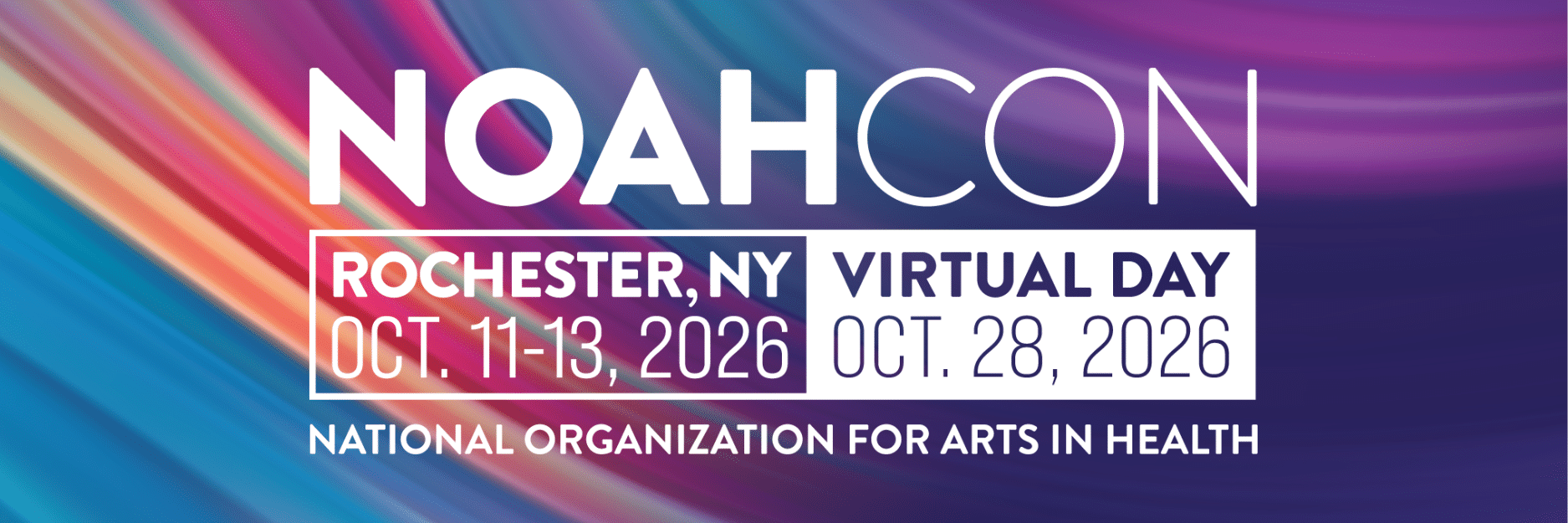
In partnership with the Eastman Performing Arts Medicine Center at the University of Rochester.
The annual National Organization for Arts in Health (NOAH) conference creates space to explore timely topics in arts in health, share effective programs and practices across healthcare and community settings, and connect with a growing network of professionals dedicated to the field. Together, participants inspire conversation, collaboration, and innovation at the intersection of arts and health.
NOAHCON attracts artists of all disciplines, arts administrators, healthcare professionals (both clinical and administrative), researchers, creative and expressive arts therapists, designers, educators, students, and anyone interested in the transformative impact of the arts on health and wellbeing.
Visit www.thenoah.org/noahcon-26/ for more information.
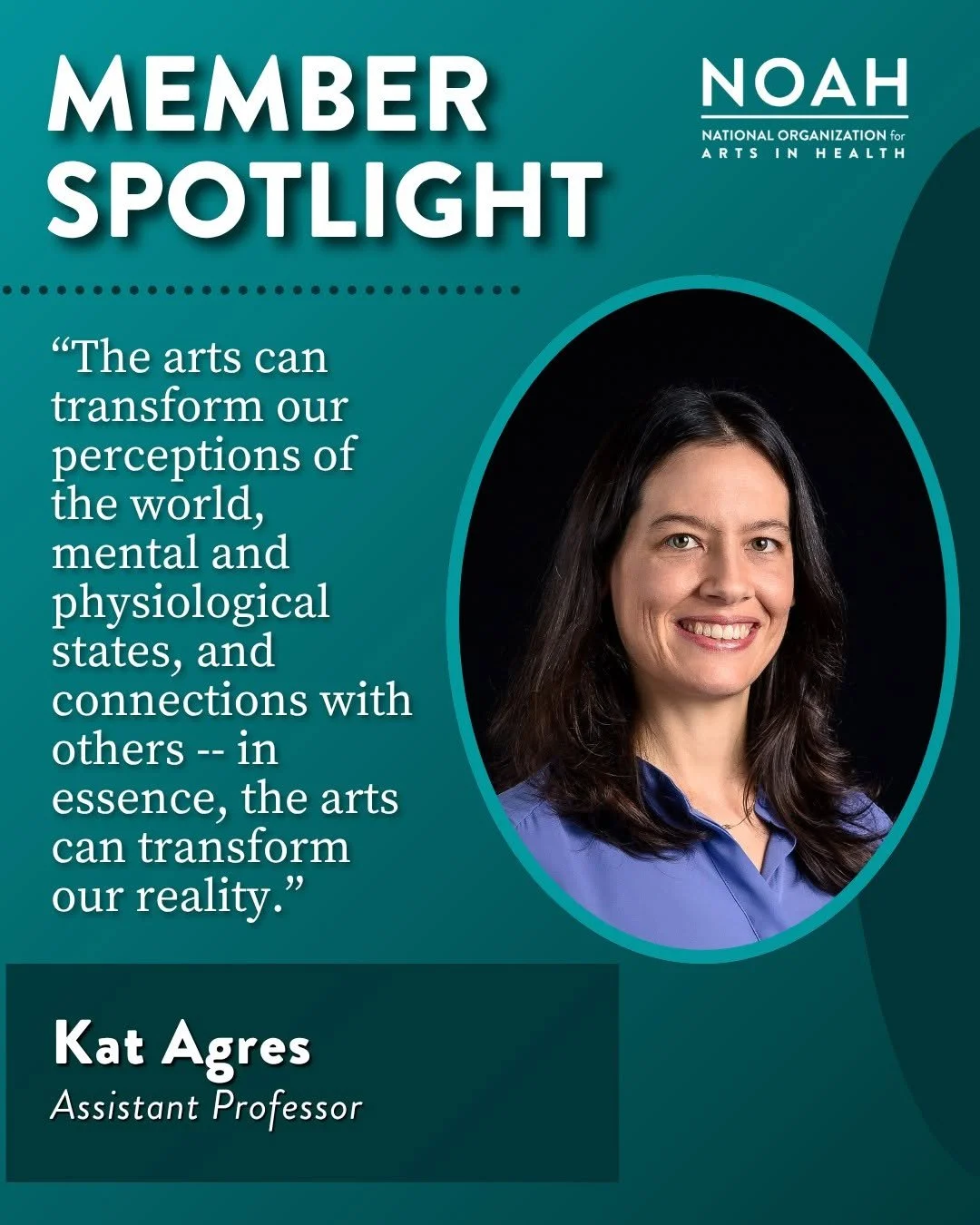
“From Practice to Evidence - Building Evaluation Capacity in Arts & Health with The THRivE Toolkit” presented by Yifan Chen and Dr Kat Agres
🗓️ Tuesday, October 13th
🕰️ 10.15am - 10.55am (EDT)
📍 Howard Hanson Hall (HHH) - 4th Floor
Arts in health programs are expanding rapidly across community and public health settings, yet many practitioners face a persistent challenge: while arts-based programs are often meaningful, engaging, and valued by participants, they often lack rigorous evaluation. This gap limits the field’s ability to build a stronger evidence base, communicate impact clearly, and secure sustained investment from funders, healthcare systems, and policymakers. This presentation introduces The THRivE Toolkit (Tools for Health Research and Evaluation in Arts and Heritage), an open-access, practice-oriented resource developed to help arts/heritage and health practitioners design stronger evaluations in real-world settings.
Grounded in the needs of the field, The THRivE Toolkit was created to address a common challenge in arts and health: practitioners are often asked to demonstrate impact, but many lack the training, time, or institutional support to design rigorous evaluations. The toolkit responds to this need by translating research and evaluation principles into practical, accessible guidance that can be used by artists, program leaders, community organizations, and health partners without requiring formal research training.
This presentation will begin by outlining the motivation for the toolkit: the urgent need for stronger evaluation capacity in arts and health, particularly in community and public health contexts where resources are often limited but demand for evidence is high. It will then provide an overview of the toolkit’s core framework for designing meaningful evaluation: planning evaluation objectives, selecting target health and wellbeing outcomes, identifying appropriate and feasible measurement strategies (including validated scales), developing a study design, analyzing data, and tailoring dissemination strategies to different stakeholders. Rather than presenting evaluation as a purely academic exercise, this talk frames it as a practical and strategic tool for conducting rigorous evaluation, generating stronger evidence for the health and wellbeing impacts of arts programs, and translating findings into support for future funding and sustainability.
To make the session engaging and applicable, attendees will be invited to participate in brief reflection prompts throughout the presentation (e.g., identifying their most pressing evaluation needs, or selecting appropriate outcomes and tools in sample scenarios). These interactive prompts will help participants connect the toolkit’s framework to their own practice. The presentation will also include case examples illustrating how the toolkit can support evaluation planning across diverse community and public health settings, and how stronger evaluation can support more strategic dissemination and stronger cases for funding and policy support.